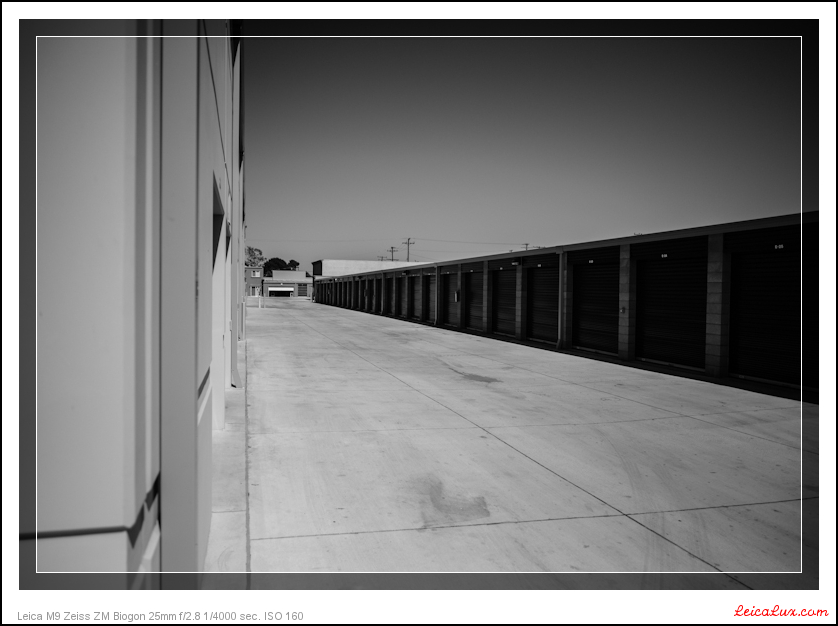
I've been contemplating to try a focal length that's a bit wider than 35mm. With 50mm being my favorite focal length, I'm used to picking out a single subject and separating it from the background. If you remember my previous post about shooting pictures with more depth, perhaps a wider field of view will encourage me to work more with the entire scene.
Here is a gem of a lens... if Internet rumors can be trusted, even Zeiss admits that this is the sharpest lens they've ever made. Although I'm not a person that's big on sharpness, even I had to do a double-take when I viewed some of its images at 100% and marvel at its incredible details. Also, as much as I love a fast aperture, I felt it's a bit unnecessary on a wide angle lens since I'm most likely not going to try to isolate my subjects. I think it will take me a while to get use to this wide view, but I accept the challenge to incorporate more of the scene in my images.
Here is a gem of a lens... if Internet rumors can be trusted, even Zeiss admits that this is the sharpest lens they've ever made. Although I'm not a person that's big on sharpness, even I had to do a double-take when I viewed some of its images at 100% and marvel at its incredible details. Also, as much as I love a fast aperture, I felt it's a bit unnecessary on a wide angle lens since I'm most likely not going to try to isolate my subjects. I think it will take me a while to get use to this wide view, but I accept the challenge to incorporate more of the scene in my images.
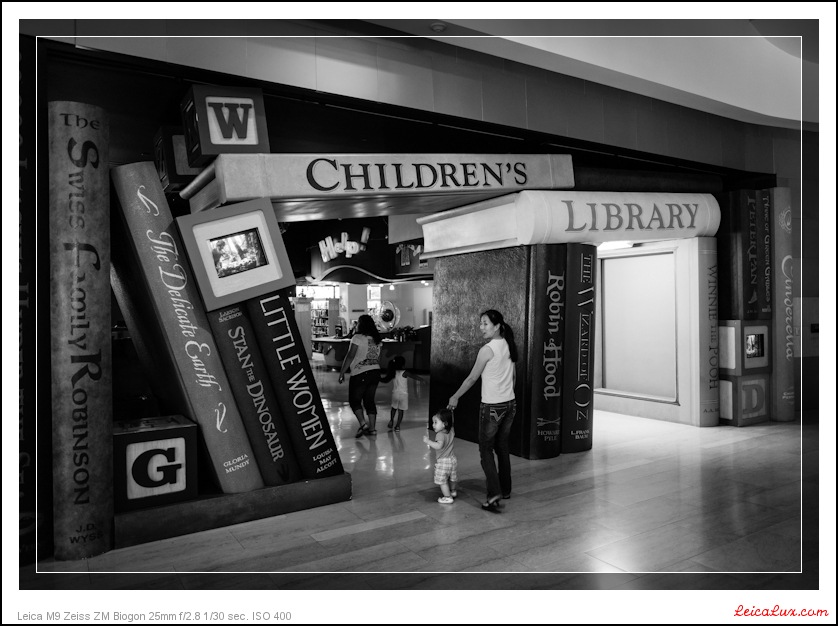
There are some additional challenges in using this lens. First, is related to the viewfinder and framelines. On the M9, 28mm is the widest frameline, but this lens brought up the 35mm framelines. I think this is because this 24mm/25mm focal length was made popular by the M8 (which had a APS-C size sensor to give this lens the 35mm FOV equivalent) and brings up the 35/24 framelines. I think there are different versions of this lens that will bring up the 28mm frameline in M9, but it's irrelevant since it's still not accurate. So the best solution for accurate framelines is to use an external viewfinder. Again, stressing how lazy I am, I noticed that if I just use the ENTIRE viewfinder for framing, it's nearly the same!
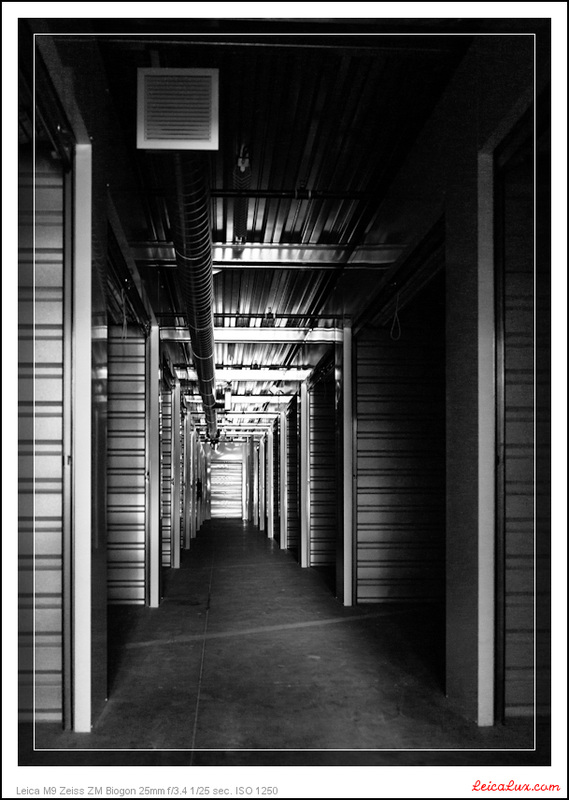
The second issue is related to properly coding the lens to take advantage of the M9 in-camera adjustment for wide angle lenses. I read a few sites and the consensus seems to be the 28mm Elmarit ASPH. I tried it, and the camera somehow rejected it. It turns out that since the lens is bringing up the 35mm framelines, the camera will not accept the 28mm 6-bit coding. One way to get around this is to manually flip the frameline-toggle to show the 28mm/90mm framelines, then the camera will accept the 6-bit code as you take the shot. Of course, I weaseled my way out of that as well, by coding it as the 24mm Elmarit ASPH, which still provided a good enough image to work with.
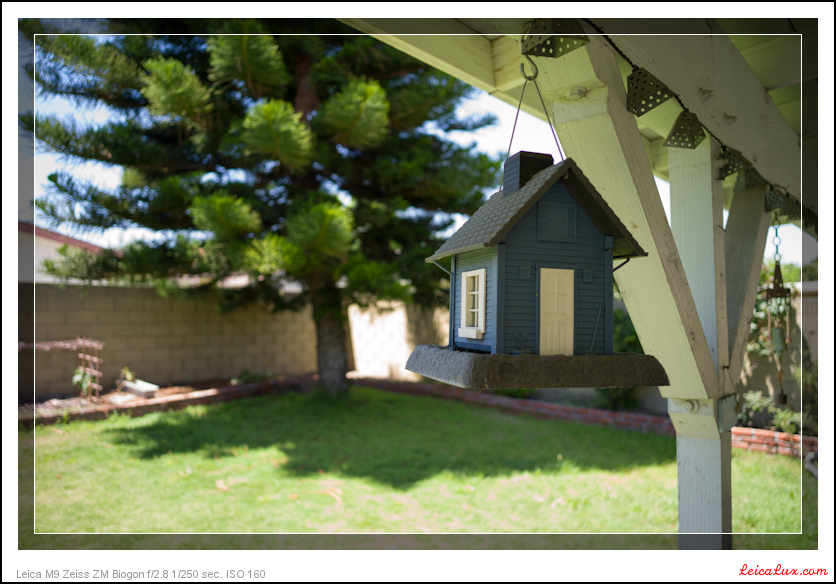
Lens coding cannot solve the last problem, which means in my automatic image border, it will display the wrong lens name! Lightroom doesn't allow the user to easily modify the lens meta data in the EXIF. So I searched high and low, and found a nifty Lightroom plugin called "LensTagger". Now after I import my images, I can simply find all of the 24mm Elmarit images and change their lens name to "Zeiss ZM Biogon 25mm". The plugin will update the EXIF data in your original file, so after it's complete, you'll have to tell Lightroom to reload metadata from files again. Now, I'm a happy camper!
Lens coding cannot solve the last problem, which means in my automatic image border, it will display the wrong lens name! Lightroom doesn't allow the user to easily modify the lens meta data in the EXIF. So I searched high and low, and found a nifty Lightroom plugin called "LensTagger". Now after I import my images, I can simply find all of the 24mm Elmarit images and change their lens name to "Zeiss ZM Biogon 25mm". The plugin will update the EXIF data in your original file, so after it's complete, you'll have to tell Lightroom to reload metadata from files again. Now, I'm a happy camper!


 RSS Feed

